The Collector’s Guide to Real vs. Veneered Mid-Century Teak
Mid-century teak furniture, prized for its rich color, durability, and timeless mid-century modern aesthetic, became the hallmark of Danish and British modern design. Yet one of the most common misconceptions among collectors is that every piece of mid-century teak furniture is solid wood. In reality, a large share of furniture from the 1950s to 1970s was constructed with teak veneer: a thin, high-quality layer of teak applied over a core of beech, oak, or particleboard.
Veneer wasn’t a shortcut; it was a design innovation that allowed makers to achieve beautiful finishes without the cost of solid teak. Still, for buyers and restorers today, understanding that distinction matters. Identifying solid versus veneered teak helps determine value, durability, and how a piece can be refinished or repaired. Whether you’re shopping, restoring, or appraising, knowing how to identify real teak can save you money and frustration while deepening your appreciation for authentic craftsmanship.
The Rise of Teak in Modern Furniture
Teak wasn’t just another wood. It was the material that defined modern design’s golden age. Designers loved it for good reason: it’s durable, naturally resistant to moisture and warping, and has a depth of color that only gets richer over time. The golden-brown grain gave warmth to the minimalist silhouettes of the era, balancing simplicity with soul.
Danish designers like Hans Wegner, Finn Juhl, and Kai Kristiansen championed solid teak and high-quality veneers, while British makers such as G-Plan, Nathan, and McIntosh popularized teak for the growing middle class. As demand soared, manufacturers began using veneer to keep costs manageable, allowing beautiful designs to reach more homes.
The result? A mix of solid teak, veneer over hardwood, and veneer over particleboard all bearing the same “teak” label. For collectors today, that mix can make identification tricky
Solid Teak vs Veneer Explained
Let’s start with the basics.
Solid teak means the entire piece (or at least major components like legs and tabletops) is made from teak wood throughout. You’ll see consistent grain patterns inside and out, and it can be refinished multiple times over its life.
Teak veneer is a thin sheet of teak (usually less than 1/16”) applied to a core of another wood like oak, beech, or particleboard. Veneer allowed furniture makers to use less of the expensive teak while maintaining the same visual appeal.
Here’s a quick comparison:
Grain & Texture: Solid teak shows natural, flowing grain that continues across edges and undersides, giving each piece unique character. Veneer often displays repeated or “wrapped” patterns that reveal a thin layer over another wood.
Weight & Feel: Solid teak feels substantial and dense in hand, while veneered furniture is noticeably lighter.
Durability & Refinishing: Solid teak can be sanded and refinished multiple times; veneer allows only light refinishing, as sanding too deeply exposes the core.
Value & Collectibility: Solid teak generally carries higher market value and collector appeal. Veneered pieces are typically more affordable, though designer or rare examples can still be prized.
Construction: Solid teak is consistent throughout, whereas veneer is a teak surface bonded to a secondary material like beech, oak, or plywood.
Both have their place in mid-century history. The key is recognizing which you’re dealing with so you can price, maintain, and restore accordingly.
How to Spot Real Teak
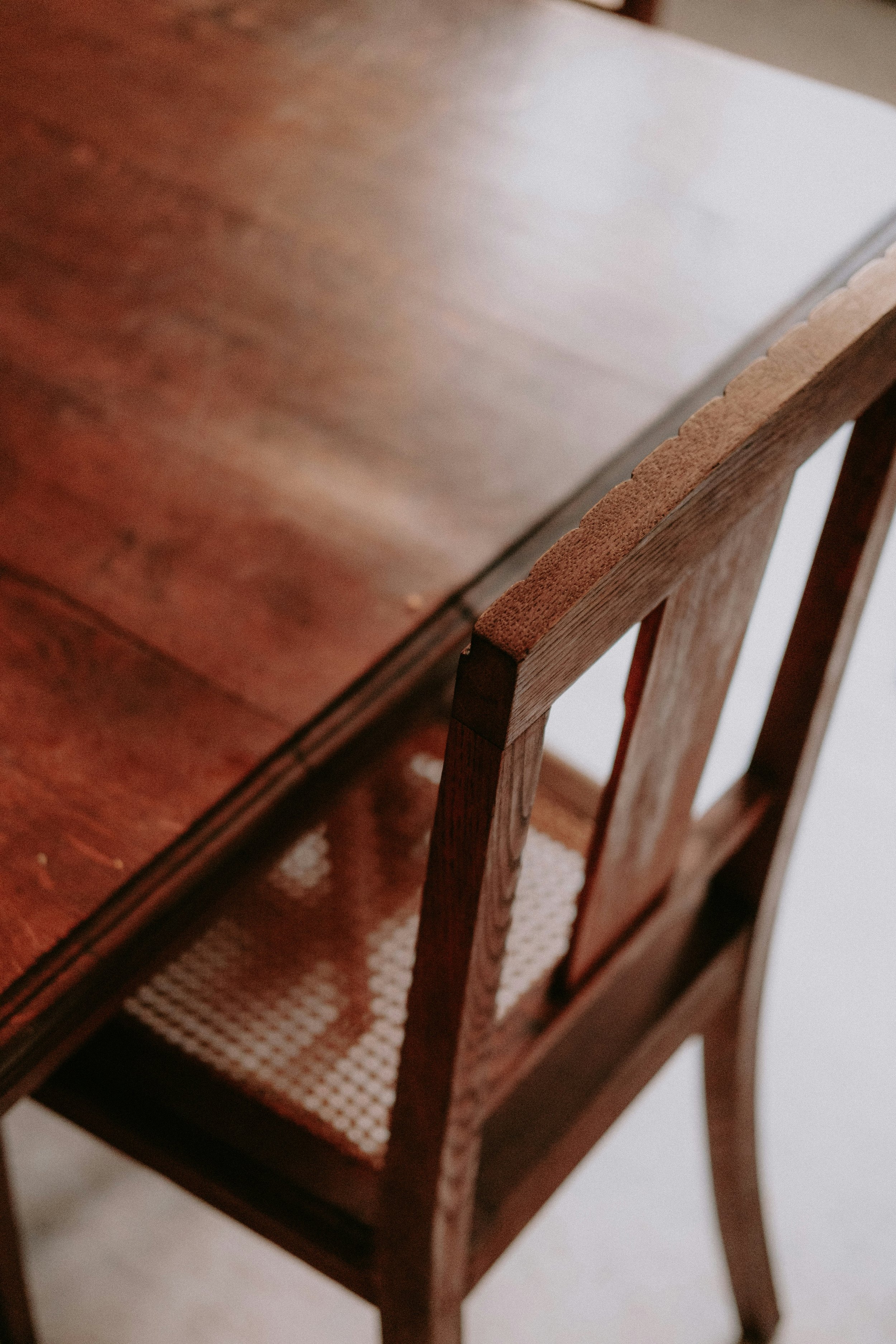
If you’re inspecting a piece in person or even studying listing photos, here are some reliable clues.
1. Check the Grain and Color
Solid teak has depth and character, ranging from deep golden-brown to rich reddish hues that darken naturally over time. Its grain varies across the surface, with subtle irregularities that give each piece a unique personality. Veneer, by contrast, often looks overly uniform or repeats patterns.
Tip: Teak also has a slightly oily or waxy feel when untreated. This is a tactile clue that’s hard to fake.
2. Look at the Edges and Underside
Run your hand along corners and edges. Solid teak shows continuous grain through the edges, while veneer may “wrap” around corners. You’ll often notice a faint line or a shift in pattern where the veneer sheet ends. Flip drawers or check the underside: a lighter wood core usually signals veneer.
3. Weight and Construction
Teak is dense. A solid teak coffee table or sideboard will feel surprisingly heavy for its size. Veneered pieces, especially those with particleboard cores, are noticeably lighter.
Also pay attention to joinery. Dovetail joints, solid wood drawer backs, and thick framing are usually signs of higher craftsmanship and often solid teak or teak over hardwood.
4. The Finish Test
Run your fingers over the surface. Real mid-century teak furniture feels warm and tactile, even if lightly worn. Veneer, especially if refinished, may feel overly smooth or artificial.
5. Smell the Wood
Yes, seriously. Authentic teak has a distinct earthy-leather scent when freshly sanded or rubbed.
Why Teak Veneer Can Still Be Valuable
It’s important to remember: veneer doesn’t automatically mean “cheap.” In fact, some of the most respected mid-century pieces, like those by G-Plan or Younger, used high-quality teak veneer applied to solid wood bases. These pieces remain collectible because the design and craftsmanship outweigh the material distinction.
Veneer only becomes a concern when it’s applied to particleboard or shows signs of lifting, bubbling, or water damage. In those cases, restoration can be challenging, since the veneer layer is thin and easy to sand through.
If you’re restoring veneered teak, avoid deep sanding. Instead, use gentle cleaning and refinishing methods like mineral spirits and a light oil finish to preserve the surface. A skilled restorer can re-adhere lifting veneer and repair chips invisibly.
Essential Tips for Buying Mid-Century Teak Furniture
When shopping for mid-century teak furniture, start by reading listings carefully. Phrases like “teak-style,” “teak finish,” or “teak veneer” often indicate the piece isn’t solid teak. If a listing says “solid teak”, that’s a safer bet—but when in doubt, ask the seller.
Examine edges and undersides closely. Solid teak maintains consistent grain and color, whereas veneer typically exposes a different wood underneath. A small flashlight or mirror can make inspection easier.
Look for maker marks such as “Made in Denmark,” G-Plan, McIntosh, or A.H. McIntosh of Kirkcaldy. These signals indicate either solid teak or a premium veneer.
Check condition carefully: even solid teak can be over-sanded, dried out, or unevenly colored. Inspect joints, drawers, and overall sturdiness before buying.
Finally, buy from reputable sellers specializing in mid-century teak furniture. Dealers experienced in authentic mid-century modern pieces are more likely to accurately describe whether a piece is solid teak or veneer, helping you make a confident, informed purchase.
Common Myths to Keep in Mind
Veneer isn’t fake wood. It’s a thin layer of real teak applied to another material — quality depends on the core and application.
Not all Danish furniture is solid teak. Even premium lines often used veneer. Focus on craftsmanship, not just wood type.
You can’t always sand and refinish teak. Veneer is delicate and can only be lightly refinished once or twice; over-sanding ruins its surface.
The Advantage of an Educated Eye
Learning to tell real teak from veneer is part skill, part instinct and 100% worth developing if you love mid-century design. Once you’ve seen and touched enough examples, the clues become second nature.
Remember: solid teak feels alive. Its grain, tone, and weight reveal its authenticity. Veneer, while not “less than,” tells a different story about accessibility and production innovation in mid-century design. Both have their place in the collector’s world; the key is knowing which is which before you buy, refinish, or sell.
By learning to identify solid teak versus veneer, you’re not just buying mid-century modern furniture—you’re investing in authentic pieces, preserving design history, and making smarter collecting choices.